


Pre-Authorization Is Where Member Trust Is Won or Lost
Pre-Authorization Is Where Member Trust Is Won or Lost
A member has paid for cover. Their doctor has recommended treatment. Now they’re waiting for someone they can’t see to say yes.
Insurance pre-authorization turnaround isn’t just an operations metric. It’s the point where a promise of protection becomes a real experience. A slow decision is frustrating; a slow decision with no explanation leaves the member wondering whether their cover works at all.
The wait is a care problem, not just a queue
In its 2025 prior authorization physician survey, the American Medical Association reports that 95% of surveyed US physicians encounter care delays associated with prior authorization. That’s a US physician-reported finding, not an African delay rate or a measurement of member trust.
The practical question for an HMO is what happens during that wait. Has the request reached the right reviewer? Does the provider know what’s missing? Can the member find out what happens next without starting another call?
Those questions need operational answers, not a faster-looking dashboard.
Separate the administrative wait from clinical review
Pre-authorization checks whether a proposed service meets the relevant coverage and review requirements before it proceeds. It isn’t a promise that every eventual charge will be paid. South Africa’s Anglo Medical Scheme explicitly distinguishes authorization from payment in full and describes a separate process for emergencies.
A useful workflow separates three kinds of work:
- Incomplete requests: Return a specific list of missing information to the provider, with an owner for follow-up.
- Routine administrative checks: Validate the member and requested service against the applicable rules before routing the case.
- Clinical exceptions: Send complex or disputed cases to an appropriately qualified reviewer. Urgent cases need a defined escalation route, not the ordinary queue.
Automating missing-field checks can remove repetitive work. It doesn’t make a clinical judgment safe to automate.
Explore Curacel Health’s pre-authorization offering and identify which administrative steps your team could simplify.
Make the next step visible
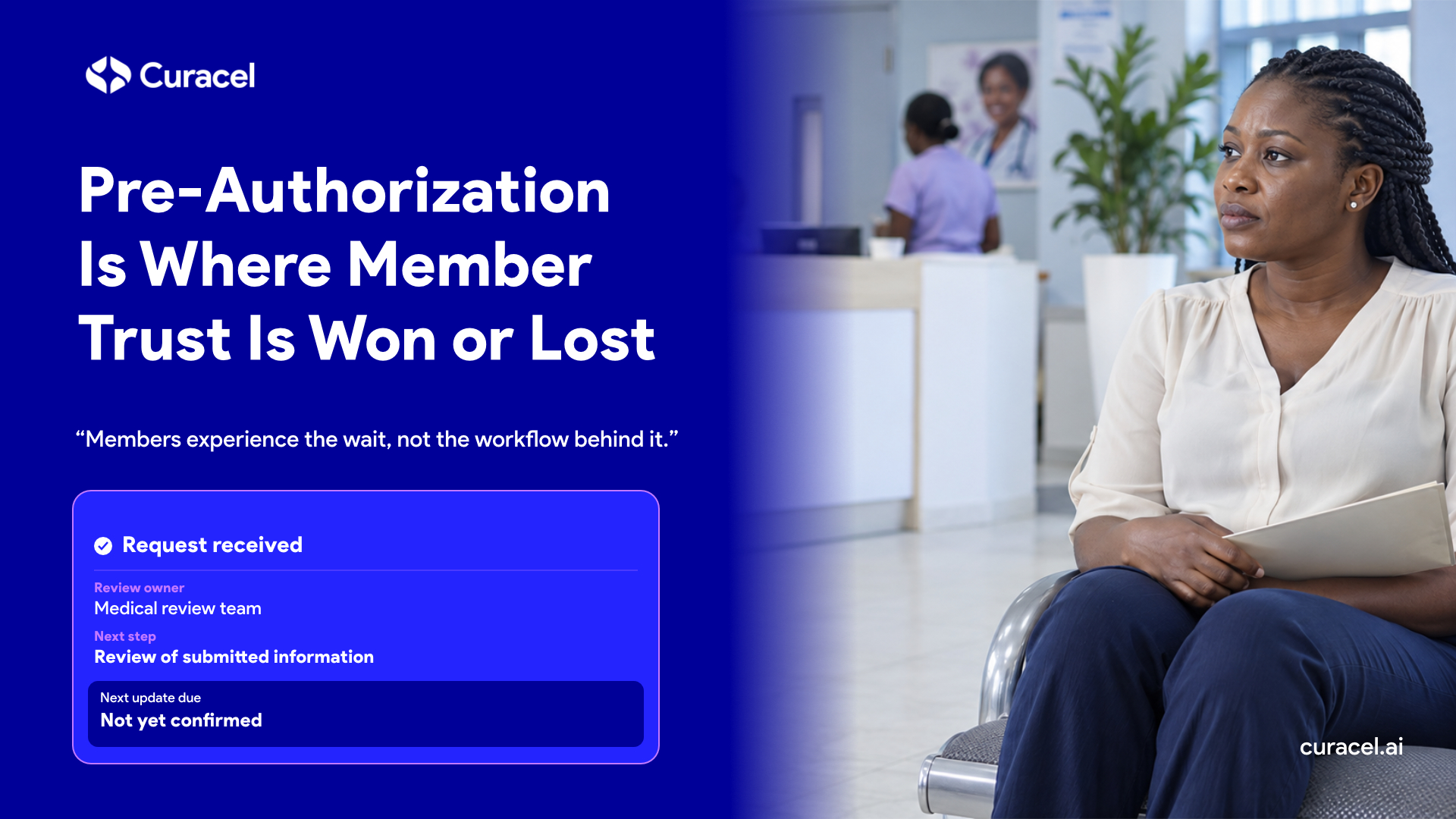
“Pending” tells a member almost nothing. A useful update explains whether the provider needs to supply information or the insurer is reviewing a complete request. It also names the next action and when another update is due.
Curacel’s pre-authorization API documentation illustrates the value of structured intake: requests carry enrollee details, diagnoses and service items. That structure gives teams something precise to validate instead of an inbox conversation to interpret.
Status visibility still needs privacy controls. A member should receive an understandable update, not another patient’s information or an unfiltered internal clinical note.
Measure the wait that averages hide
Start with the full journey from initial receipt to communicated decision. Then separate time spent waiting for information from time spent in review. Otherwise, a fast processing average can hide members whose requests sit unresolved.
- Tail turnaround: Track the slowest portion of requests alongside the median, split by urgency.
- Rework: Monitor how often requests return for missing information and which providers need intake support.
- Communication: Track overdue updates and repeat status enquiries, alongside complaints and appeal outcomes.
Use your own baseline before setting improvement targets. A regulatory deadline in another country isn’t a local service standard, and a short turnaround doesn’t excuse an unexplained denial.
The Takeaway
Member trust isn’t earned by approving every request. It’s earned through a fair decision that arrives when expected, with an explanation people can understand.
Remove avoidable administration. Keep clinical accountability clear. Never leave the member guessing who acts next.
Subsribe to our newsletter to receive weekly content






.svg)


