Insurance Technology Adoption: When the Old Workflow Won't Let Go.
Insurance Technology Adoption: When the Old Workflow Won't Let Go.
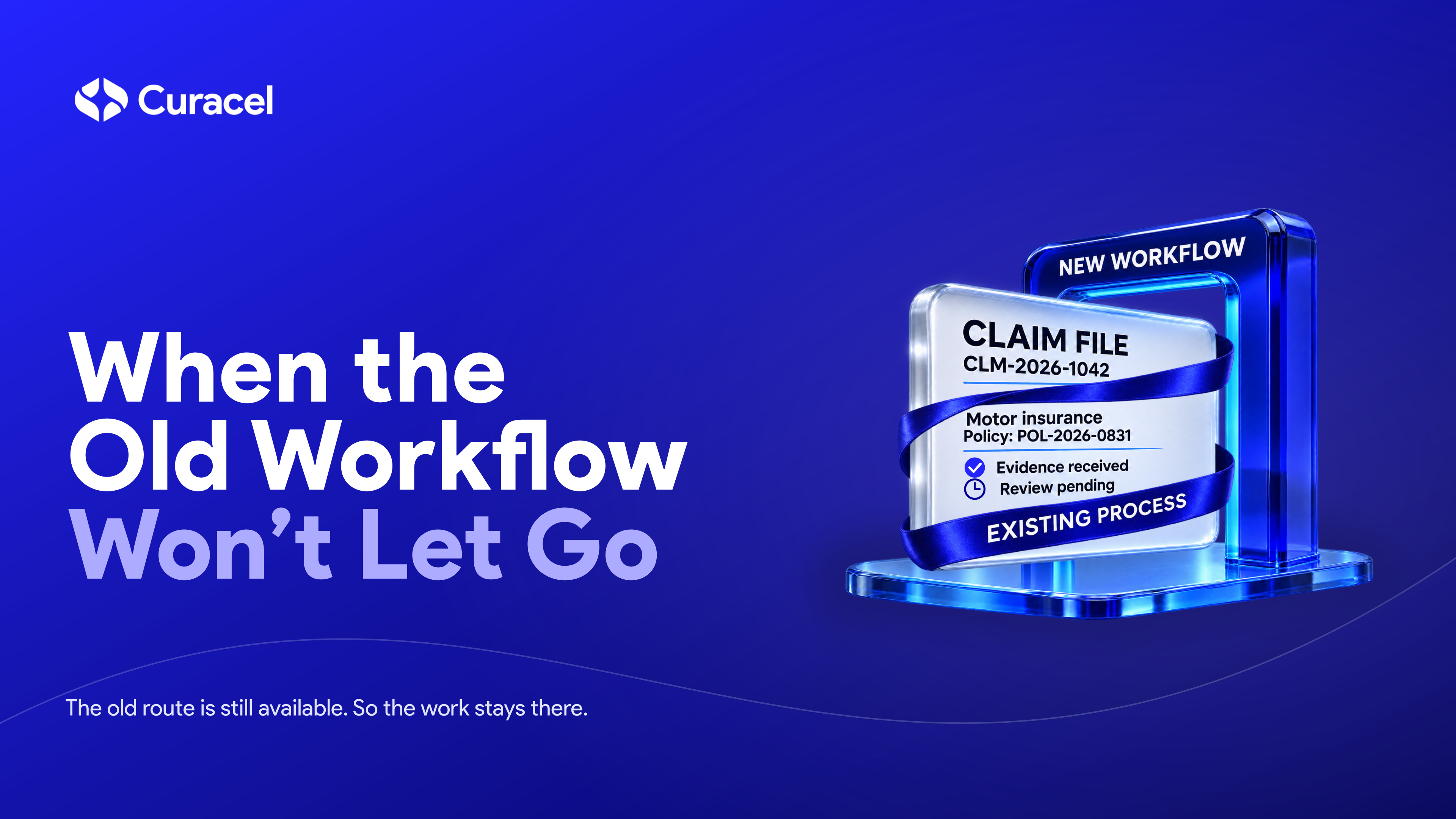
A new screen can be live for a year while the old one is still doing the work.
During our podcast with Juan Cazcarra, he talked about what happens after a system is launched. Communication and training are the obvious moves. He named the less popular one. "Sometimes you just need to make it compulsory."
He used a CRM his group had put in two years earlier. One screen. One view of the customer. "It took a year for people just to stop doing their different screens and the different systems." The launch had not moved the work. The old route was still available.
The system was live. The old screen was still the job.
A launch is not a move
Adoption is not a login count. It is whether the case now finishes on the new route.
- Completed work: Look at the cases that closed, not the people who attended the training.
- Old route: Name what the old screen still gives the team. A missing field, a faster path, or a habit.
- Owner: Someone has to decide when the old route stops being acceptable.
Juan was describing a group transformation, not a software demo. The test is the same in a smaller operation. If people can still finish the job the old way, the new system is optional.
A published piece on digital transformation for African insurers covers modernising without breaking what works. This one stays on the behaviour after go-live.
Push the fast group, then go back for the slow one
Earlier in the same conversation, he warned against lifting the whole company at once. "Don't try to lift the whole company at the same time. It's just too heavy." Look for the champions. A team in one country. A leader who already wants the change. Show the result, and let others follow that example.
He did not treat the slower group as a write-off. "You cannot leave behind those that are moving slower." When asked where to draw the line, he said there isn't a cut-off. Push the people who move faster, then go back and pull the others in.
Champions without a way back become a pilot the rest of the company never joins. A mandate with no support becomes a login people resent.
Make the old route harder to keep
He was plain about the limit of explanation. Some people will not move unless the old path is closed. For an agent app, he described a window to put quotes, leads and policies in the new tool, because the manual system could then be shut. For the CRM, the old screens stayed available, and the move took a year.
The difference is the off switch. If the old route still completes the job, a speech will not retire it.
- Window: Give a date, and say what must be done in the new tool by then.
- Support: The slower team still gets someone who can pull them across.
- Close: When the window ends, the old route should not still finish the case.
This is his operating view, not a template for every insurer. It is not a claim that a vendor supplied the CRM, or that a vendor can force the change. The decision sits with the company that owns the process.
The Takeaway
A live system is not an adopted one. During our podcast with Juan Cazcarra, he talked about a CRM that took a year to replace the old screens, and about pushing the fast group without leaving the slow one behind. If the old route can still finish the job, the new one has not won.
Watch the full conversation with Juan Cazcarra.
Ready to see which route still finishes the work? Talk to Curacel.
Subsribe to our newsletter to receive weekly content