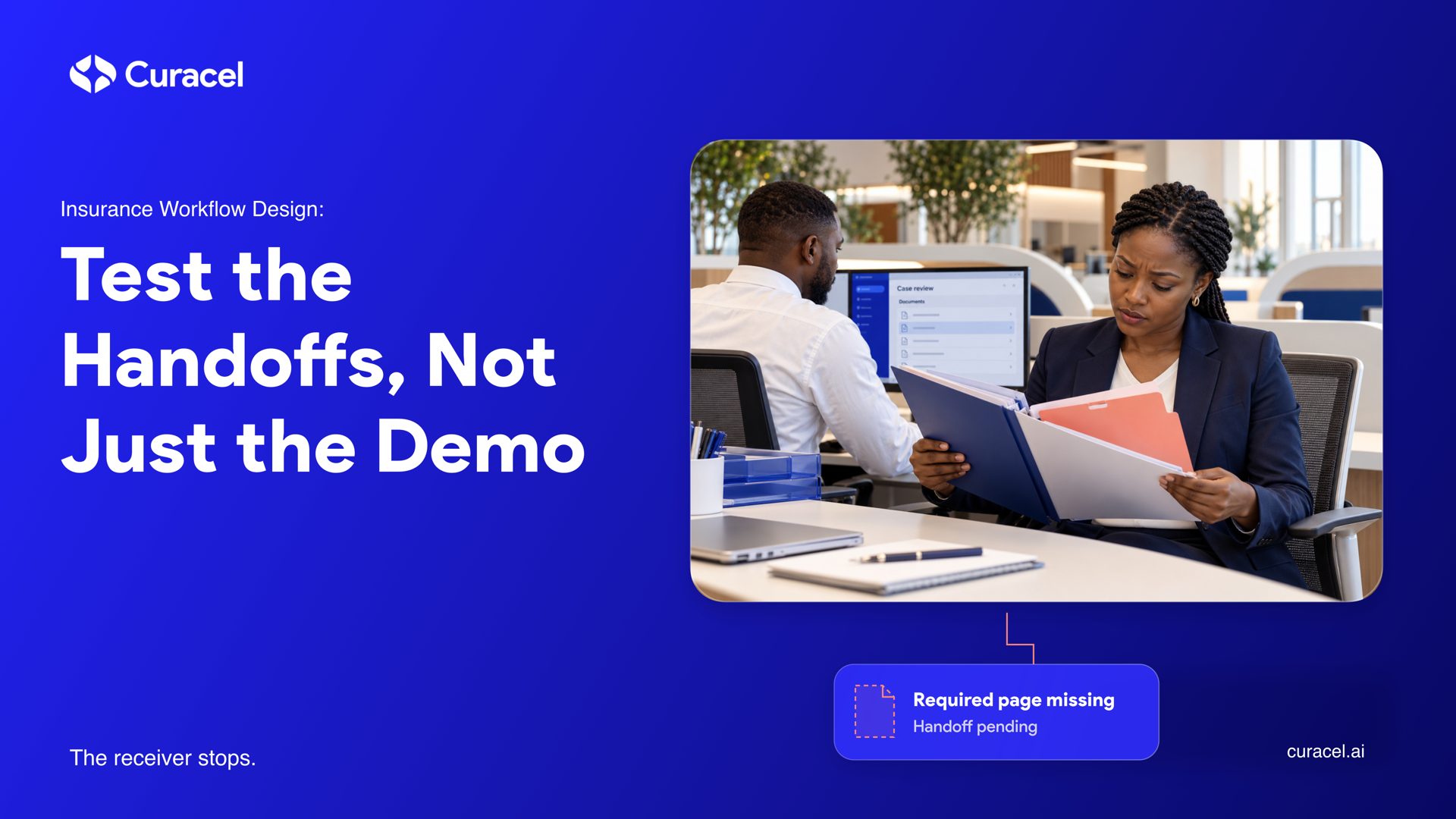
Insurance Workflow Design: Test the Handoffs, Not Just the Demo
Insurance Workflow Design: Test the Handoffs, Not Just the Demo
A software demonstration can look convincing while leaving the hardest part of insurance work untouched: the case that arrives incomplete, crosses departments and doesn't fit the expected path. If we judge the software only on the straightforward case, we haven't tested the work the team will inherit.
During our podcast with Sandip Bhadury, he talked about a gap between the insurer's IT team managing a project and the software vendor understanding insurance work. He also described requirements changing during implementation, after the demo. For us, that raises a practical question before buying software: what must it do when the real work gets difficult?
Start with the work your team actually receives
Before comparing screens, ask the person responsible for the process to describe one job from arrival to handoff. Keep it specific enough that the vendor can demonstrate it and the receiving team can reject an unusable result.
Receiving claim documents, for example, involves more than uploading a file. The next person needs usable evidence, a clear account of what's missing and a route for resolving it.
- Input: Identify the documents and fields the job requires, including the formats your team encounters.
- Rules: Explain what makes the case complete and which checks require an authorised person.
- Handoff: Name the recipient and describe the result they can actually act on.
Our guide to digital transformation for African insurers looks at the wider modernisation question. Here, we're focusing on one decision: agreeing what successful work looks like before the team starts building it.
Give the vendor the difficult cases
Ask for more than the prepared demonstration. Use approved examples with personal details removed, or made-up test cases, that reflect where work gets difficult, and involve the people who handle those moments today.
The point isn't to catch a vendor out. It's to expose assumptions while they can still be corrected.
- Missing evidence: Show a case that lacks a required document. Check whether the result identifies the gap or simply looks complete.
- Conflicting records: Present inconsistent details. Ask what the system flags, what evidence the handler sees and who resolves the conflict.
- Unusual input: Use a difficult document format. Inspect the output rather than assuming successful processing means usable data.
- Interrupted handoff: Test what happens when the receiving team can't complete the next step. The case needs an owner, not another unattended queue.
👉 Explore Curacel Extract to turn claim documents into organised data your team can work with, then test whether the results meet your requirements for receiving documents and passing them on.
Make specification changes visible
Sandip's account of changing specifications, the agreed requirements for the software, is worth bringing into the project review. A workaround can look reasonable on its own while leaving the next team with extra checks or a different way to handle difficult cases.
Keep a shared record of the tests and results everyone has agreed to use for sign-off. When a requirement changes, record why and how it affects the team's work before treating it as agreed.
- Changed assumption: State what the demonstration or original requirements assumed.
- Affected work: Identify which documents, data or later decisions the change affects.
- Retest evidence: Run the affected test cases again and keep the results.
- Sign-off: Ask the operations lead responsible for the process to confirm that the revised handoff works for the receiving team.
Look beyond what happens on screen. Track cases that still need a decision, corrections and the time until the next authorised person can act. A faster first step doesn't establish a faster whole process.
The Takeaway
Insurance workflow design gives us a practical test before buying software: can this system deliver usable work under the conditions our teams actually face? A polished demonstration starts the conversation. The results of agreed tests should decide whether implementation is ready to move forward.
Ready to examine a document workflow? Discuss your intake and handoff requirements with Curacel.
Subsribe to our newsletter to receive weekly content